Lower chimney fire risk
Creosote is combustible. Clearing it from the flue walls removes the fuel that chimney fires feed on.
Chimney Cleaning · Thomasville, Georgia
Professional chimney cleaning that removes soot and creosote from the firebox, smoke chamber and flue — done with drop cloths down, vacuums running and a careful look at every part of the system.
What we do
Every fire leaves something behind. Fine soot, sticky tar and flaky creosote line the inside of the flue a little more each season, narrowing the passage your smoke needs to escape. Our job is to take that build-up out — thoroughly, and without leaving it on your floor.
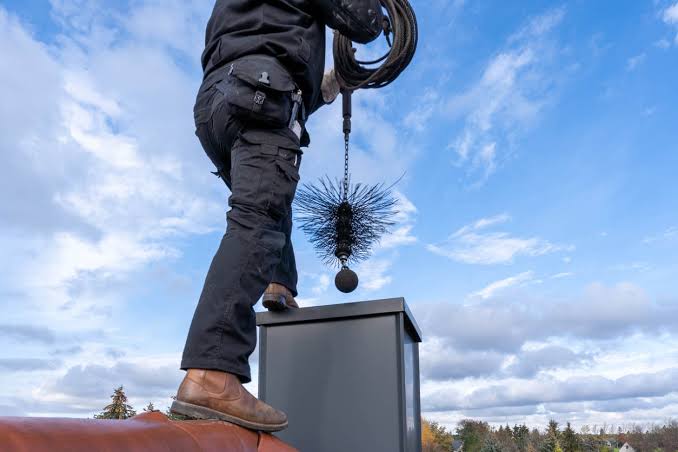
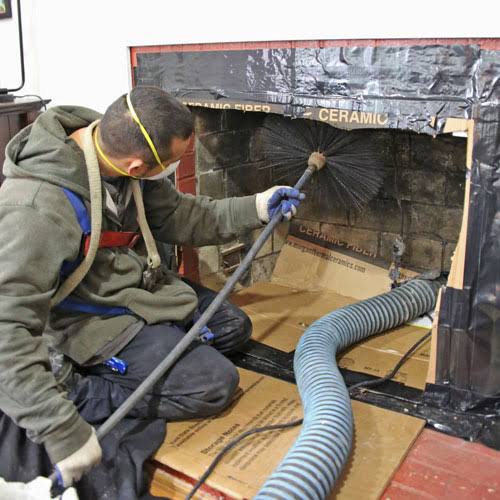
We work from inside the home and from the roof when the chimney calls for it, using rods and brushes sized to the flue and vacuum extraction to keep dust contained.
Why it matters
Chimney care rarely makes headlines in a household — until something goes wrong. Regular chimney cleaning keeps it that way.
Creosote is combustible. Clearing it from the flue walls removes the fuel that chimney fires feed on.
A flue free of build-up lets combustion gases rise the way they should instead of rolling back into the room.
Soot and creosote deposits can smell strongly in humid weather. Removing them helps keep the room fresh between fires.
A clean flue is easier to see. Cracked tiles, loose mortar or a damaged cap are simpler to catch once the soot is gone.
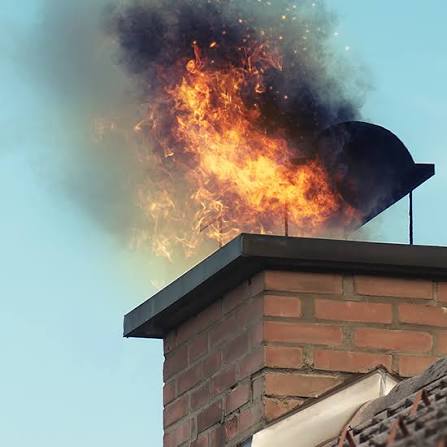
When creosote ignites inside a flue it can burn intensely and throw sparks and flame from the chimney top. Many chimney fires begin with deposits that built up quietly over several seasons. Routine chimney cleaning is one of the simplest ways homeowners reduce that risk.
Service highlights
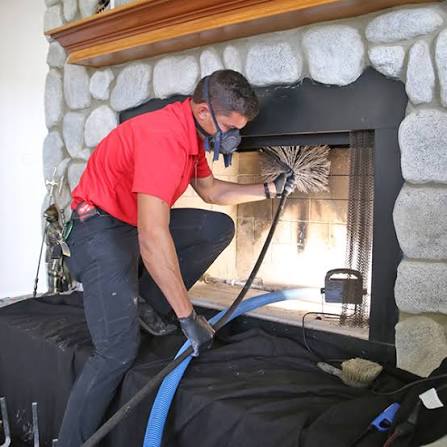
Brushing the firebox walls, damper area and smoke shelf while the hearth stays covered.
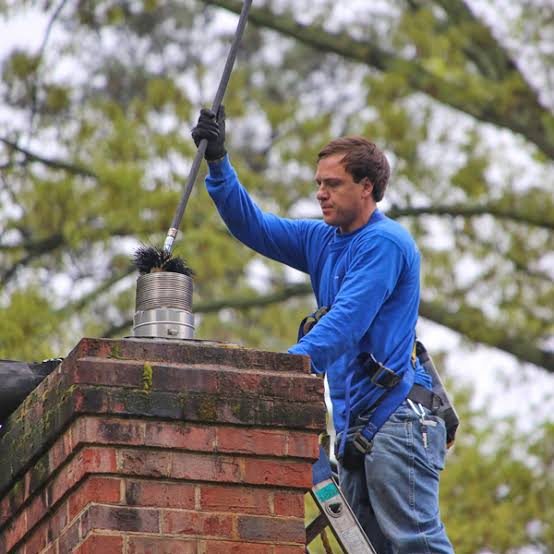
Working from the chimney top to brush the flue liner along its full height.
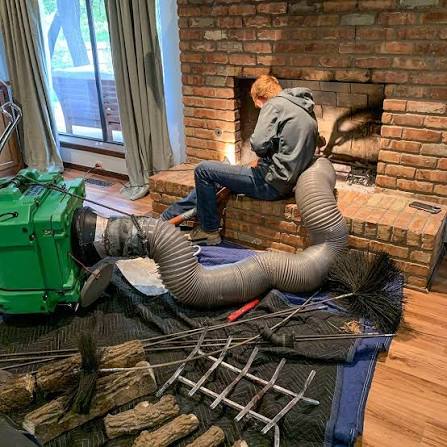
Vacuum extraction and floor protection laid out before the first brush goes in.
Our process
The order matters — protecting the room first and checking the result last.
We look at the fireplace, stove or insert with you and talk about how often it is used and anything you have noticed — smoke, smells or noises.
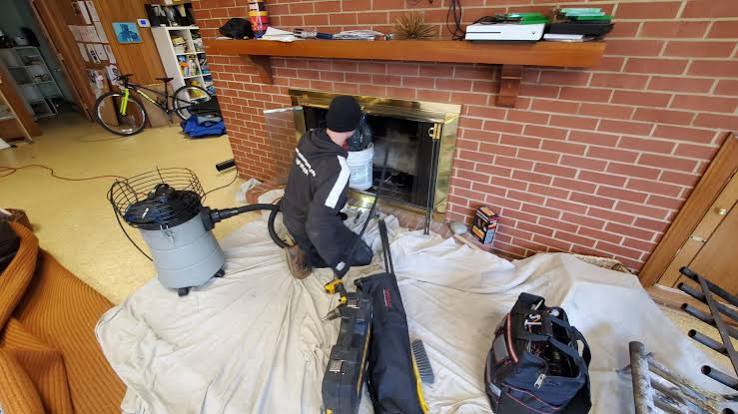
Drop cloths go down over the hearth and nearby flooring, and the vacuum is positioned to pull dust away from the opening.
Rods and brushes matched to the flue size work through the firebox, smoke chamber and flue, from below, from above, or both.
Loosened soot and creosote are collected and bagged, and the firebox is vacuumed clean.
We check the visible components and let you know plainly what we saw, including anything that may need attention later.
Ready when you are
Send us a short email with your address and the type of fireplace or stove you have, and we will reply to arrange a visit.