ChimneyCleaning.INK

Chimney Cleaning & Maintenance Service

What our chimney cleaning covers, how we look after different types of chimneys, and what you can do between visits to keep your fireplace working well.

Service categories

Five areas of chimney work

Most homes need a combination of these. During the walk-through we talk about which apply to your chimney.

Technician leaning into a fireplace beneath a white carved mantel with a vacuum hose running into the firebox
Indoors

Fireplace & firebox cleaning

The part of the system you see every day. We clear ash and soot from the firebox and brush the walls and the area around the damper.

  • Firebox walls and floor
  • Damper and throat area
  • Hearth left clean
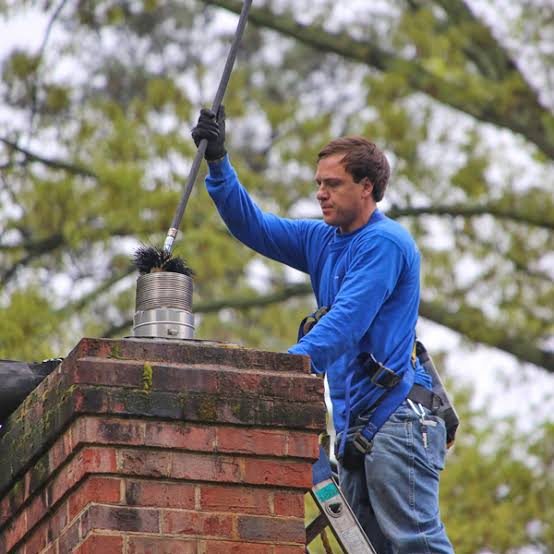
Sweep on a ladder pushing a brush rod into a stainless steel flue on top of a brick chimney
Full height

Flue & liner sweeping

Brushing the inside of the flue from the firebox to the top, using brushes suited to the liner shape and material.

  • Clay tile and metal liners
  • Round and rectangular flues
  • Loosened deposits collected below
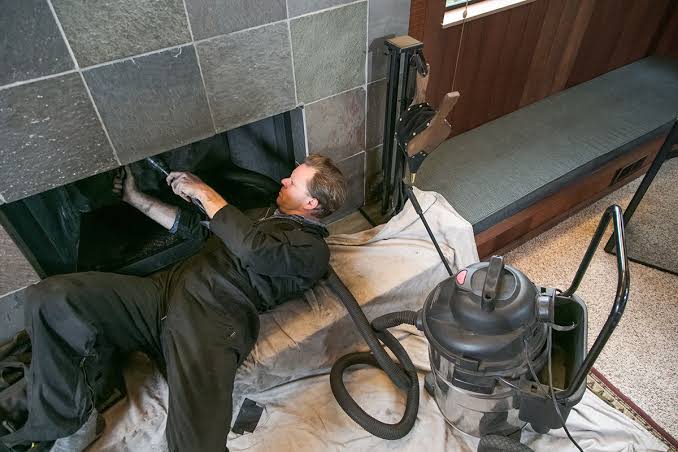
Chimney technician lying on a drop cloth reaching up into the smoke chamber of a slate-tiled fireplace with a vacuum nearby
Hidden zone

Smoke chamber & smoke shelf

The sloped area above the damper collects heavy deposits that are easy to miss. We reach up and clean it by hand and by brush.

  • Smoke shelf debris removed
  • Chamber walls brushed
  • Visible condition noted
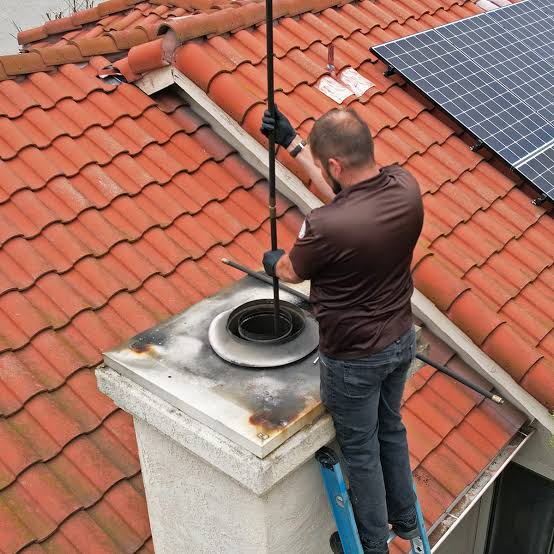
Technician standing on a ladder beside a clay tile roof feeding a rod down a round flue opening on a stucco chimney
Rooftop

Chimney top & cap check

When roof access is safe, we look over the chimney cap, crown and flue opening for blockages such as nests or leaves.

  • Cap and screen looked over
  • Debris at the opening cleared
  • Crown condition noted
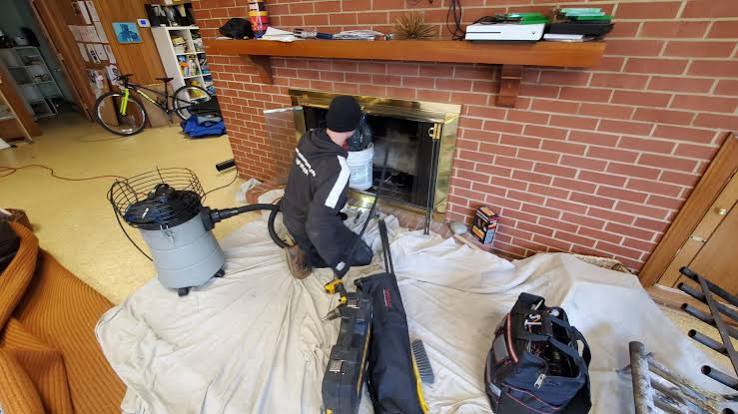
Technician working on a brass-framed fireplace in a brick wall with drop cloths covering the floor
Appliances

Inserts & wood stove flues

Fireplace inserts and freestanding stoves have their own venting. We clean the connector and flue that serve them where they can be reached safely.

  • Stove pipe and connector
  • Insert flue access
  • Baffle area where accessible
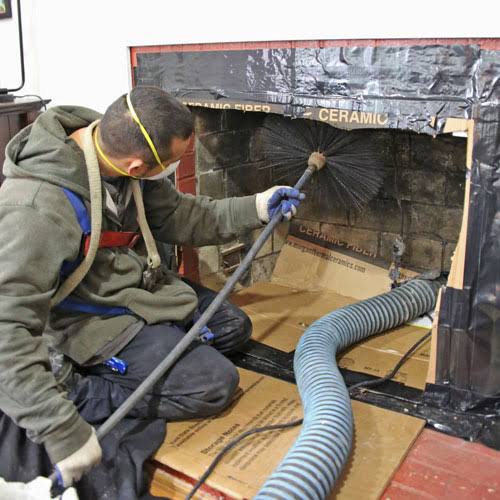
Technician with a respirator pushing a rotary chimney brush up into a fireplace sealed with protective sheeting
Method

Rotary & manual brushing

Depending on the flue, we use spinning rotary brushes, traditional rod-and-brush sweeping, or both together for heavier build-up.

  • Brushes sized to the flue
  • Sealed opening during brushing
  • Vacuum extraction throughout

Maintenance through the year

A simple chimney maintenance rhythm

A widely followed rule of thumb is to have a chimney looked at once a year, and cleaned when deposits have built up. Here is how that fits around a burning season.

Before the season

Prepare

  • Book a chimney cleaning ahead of the first fire
  • Check the damper opens and closes freely
  • Clear stored items away from the hearth
During the season

Watch

  • Burn dry, seasoned firewood
  • Empty ash regularly into a metal container
  • Notice changes in draft, smoke or smell
After the season

Reset

  • Have deposits removed before summer humidity
  • Close the damper to keep out drafts and animals
  • Make a note of anything to mention next visit

Warning signs

When your chimney is asking for attention

You do not need to wait for a set date. Any of these suggest it may be time for chimney cleaning or a closer look.

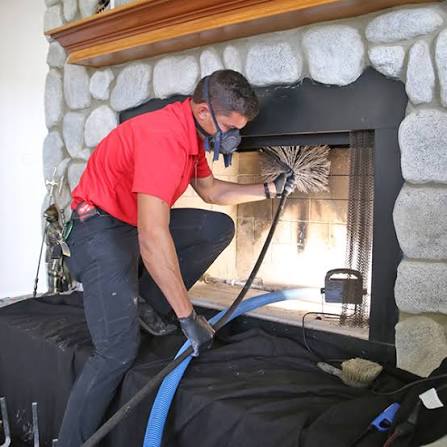
Technician in a red shirt and respirator cleaning a fireplace framed in large stone
  1. 1
    Smoke drifts into the roomPoor draft can point to a restricted or blocked flue.
  2. 2
    A campfire smell when no fire is litOften stronger on humid days when deposits absorb moisture.
  3. 3
    Black flakes in the fireboxCreosote falling from above is a sign of build-up in the flue.
  4. 4
    Fires that are hard to start or keep goingReduced airflow can make a fire sluggish.
  5. 5
    Animal or bird sounds in the chimneyNests and debris can block the flue opening.
  6. 6
    You cannot remember the last cleaningIf it has been a while, it is worth having it checked.

Useful customer information

Getting ready for your visit

Let the fire go out

Please avoid using the fireplace or stove for at least a day beforehand so the firebox and flue are cool.

Clear a path

Move fragile items, rugs and furniture away from the hearth to give room for drop cloths and equipment.

Mention the history

Tell us about past repairs, chimney fires or problems you have noticed — it helps us focus on the right areas.

Pets & access

Keep pets in another room during the visit, and let us know about gates or any roof access details.

On the job

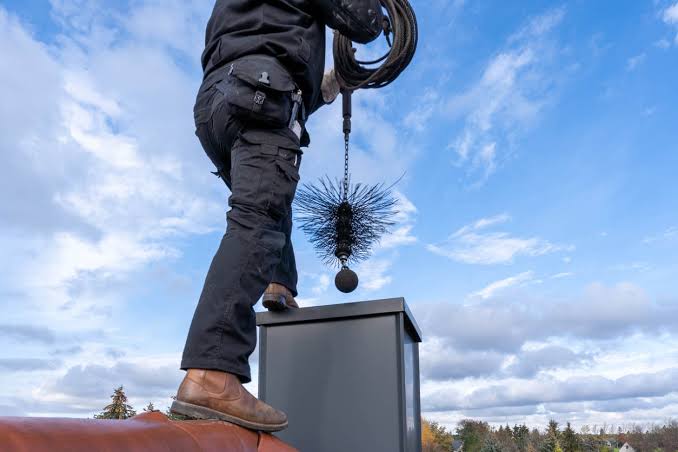
Sweep on a rooftop lowering a weighted round brush into a chimney top
Weighted brush lowered from the roof
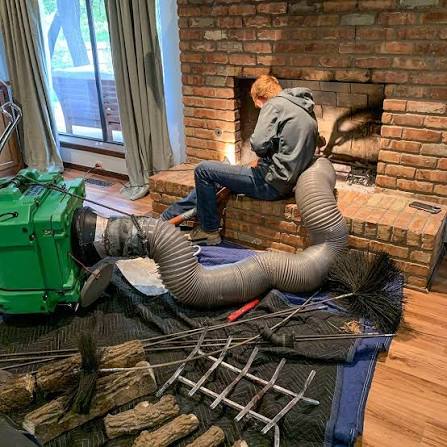
Rods, brushes and a green vacuum unit set up in front of a raised brick hearth
Rods, brushes and extraction ready
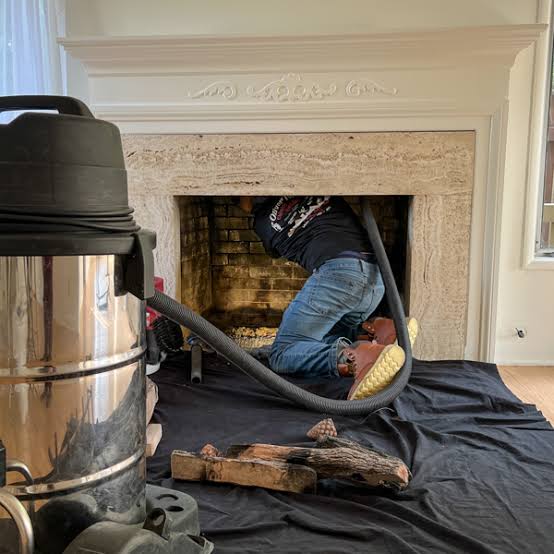
Technician working inside a fireplace with a stainless vacuum in the foreground
Firebox cleaning under a carved mantel
Technician cleaning a round flue on a stucco chimney surrounded by red clay roof tiles
Flue access on a tile roof
Technician lying on his back reaching into a fireplace smoke chamber
Reaching into the smoke chamber
Living room covered with drop cloths while a technician works at a brick fireplace
Room protected end to end

Questions

Chimney cleaning questions we hear often

What exactly is creosote?

Creosote is the residue left when wood smoke cools and condenses on the inside of the flue. It can be powdery, flaky or hard and glossy, and all forms are combustible.

Will chimney cleaning make a mess in my home?

We cover the hearth and surrounding floor, seal the fireplace opening where possible and run vacuum extraction while brushing, so dust stays contained. We clean up the work area before leaving.

Do you need to go on the roof?

Not always. Some chimneys can be cleaned fully from inside. Others benefit from top-down sweeping or a look at the cap and crown, which we do only when roof access is safe.

Do you clean gas fireplaces?

Our focus is wood-burning fireplaces, stoves and inserts. If you have a gas appliance, mention it in your email and we will tell you whether it is something we can help with.

How do I arrange a visit?

Email [email protected] with your address and a short description of your chimney, or see the Contact Us page for details.